Benefits of Starting UPSC Preparation Early
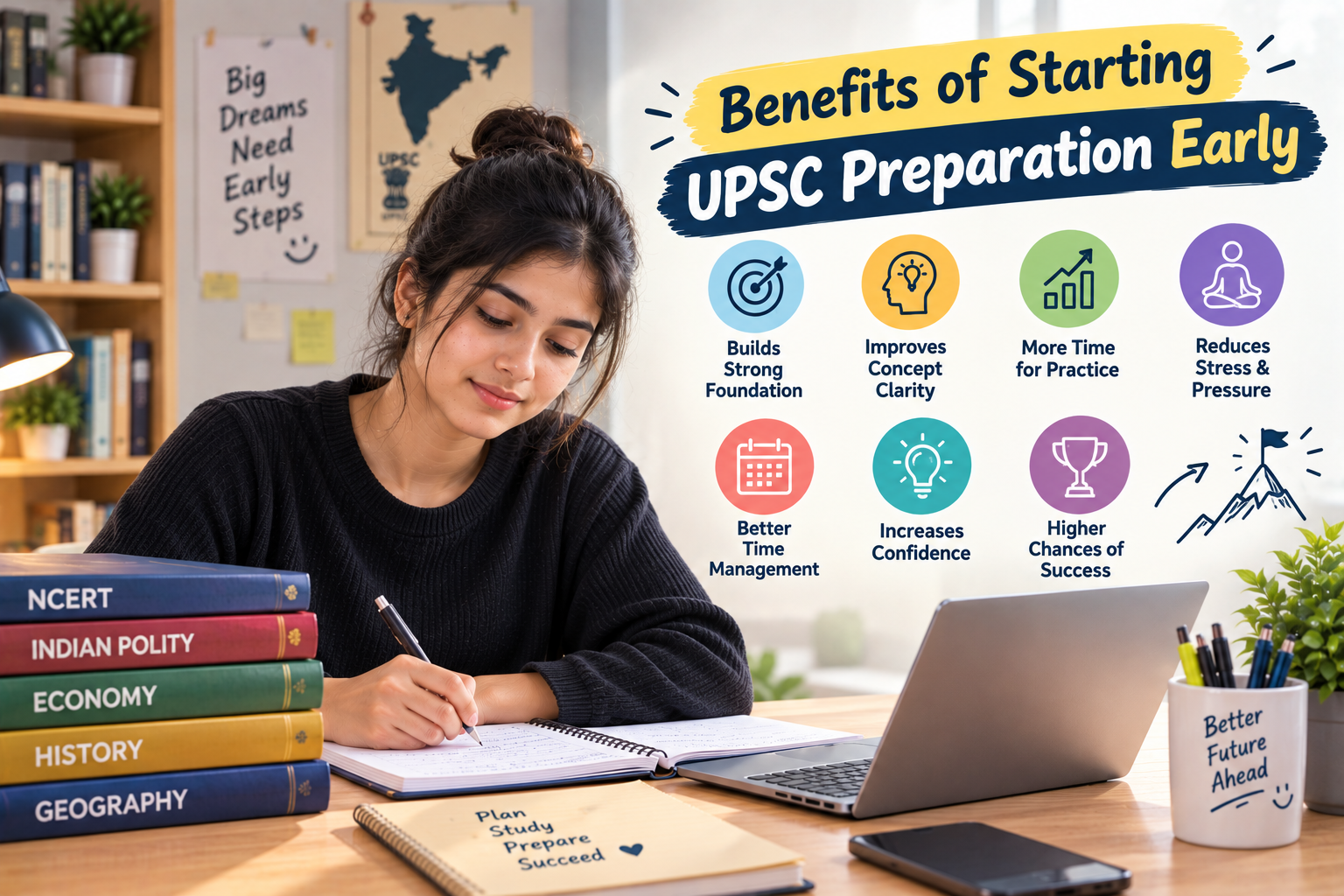
Many students and parents wonder whether UPSC preparation should begin only after graduation or whether it is useful to start building a foundation during school and college. The answer depends on what we mean by preparation. Starting early does not mean forcing a young student to follow the same demanding routine as a full-time UPSC aspirant. It means developing the knowledge, habits and skills that can make serious preparation easier in the future.
A thoughtful early foundation can give students more time to understand ideas, improve communication, develop reading habits and become comfortable with current affairs. These benefits are useful not only for UPSC but also for KPSC and many other competitive examinations.
1. More Time to Build Strong Reading Habits
Reading is one of the most valuable habits a future civil-services aspirant can develop. Students who begin reading regularly at an early age have more time to improve comprehension, vocabulary and the ability to identify important ideas.
Early reading does not have to mean studying advanced UPSC books. Age-appropriate books, newspapers, magazines and reliable educational material can help students gradually become comfortable with different subjects and viewpoints. The important goal is consistency and understanding rather than reading a large number of pages.
2. Better Understanding of Current Affairs
Current affairs become easier when students develop the habit of following important developments over time. A student who regularly reads about government, society, science, the environment, the economy and international events can gradually understand how different issues are connected.
The purpose is not to memorise every headline. Students can begin by asking simple questions: What happened? Why is it important? Who is affected? What could be the wider impact? This creates the habit of understanding news rather than simply remembering it.
3. Stronger Analytical and Reasoning Skills
UPSC preparation requires students to understand information, compare ideas and think logically. These abilities take time to develop and are strengthened through regular practice.
School students can develop analytical thinking through puzzles, discussions, quizzes, debates, problem-solving activities and questions that require explanations. When students learn to ask why, how and what evidence supports an idea, they begin developing a more independent approach to learning.
4. Improved Communication Skills
A future civil-services aspirant needs to communicate ideas clearly. Speaking, listening, reading and writing are therefore important parts of long-term preparation.
Starting early gives students more opportunities to practise expressing their thoughts. Activities such as presentations, group discussions, debates, short essays and current-affairs conversations can help students become more comfortable explaining an idea instead of simply memorising an answer.
5. Better Study Habits and Discipline
Successful preparation depends heavily on consistency. Students who gradually learn how to plan their time, complete assignments, revise and maintain a realistic routine can carry these habits into higher education and later competitive-exam preparation.
The focus should be on sustainable discipline rather than very long study hours. A short daily reading habit or a regular weekly discussion can be more useful than an intense routine that becomes difficult to maintain.
6. A Wider Foundation Across Subjects
UPSC covers a broad range of areas connected to history, geography, polity, economy, environment, science, society and current affairs. Students do not need to study the complete UPSC syllabus during school. However, developing curiosity about these areas can make later learning more familiar.
School subjects can also become more meaningful when students connect classroom concepts with real-world events. For example, a lesson about government can lead to questions about current public policies, while geography can be connected to climate, resources and regional development.
7. More Confidence in Future Competitive-Exam Preparation
Students who have already developed basic reading, writing, reasoning and current-affairs habits may find it easier to adapt when serious competitive-exam preparation begins. They are not starting every skill from zero.
This does not guarantee success. Early preparation simply creates an opportunity to develop a stronger base. Future results still depend on sustained effort, appropriate guidance, examination strategy and many other factors.
8. Early Preparation Can Support Both UPSC and KPSC Goals
Many students in Kerala consider both UPSC and Kerala Public Service Commission examinations as possible future paths. Several foundation skills overlap, including awareness of government and society, reading, reasoning, communication and understanding current affairs.
Building these abilities early can therefore give students a useful base while keeping their future options open. At the school level, the emphasis should remain on broad skills rather than narrow examination-specific memorisation.
Starting Early Does Not Mean Starting Under Pressure
One of the biggest misunderstandings about early preparation is that students must immediately follow an adult aspirant's timetable. That is neither necessary nor desirable. School education, examinations, rest, hobbies, family time and personal interests remain important.
A better approach is gradual development. A student might read regularly, discuss current affairs once a week, practise speaking, take part in debates, work on reasoning activities and learn to organise study time. These small habits can accumulate over several years.
How Compass IAS Academy Approaches Early Foundation Building
Compass IAS Academy's IAS @ School programme for Classes 8 to 12 follows a foundation-oriented approach. It combines current affairs, UPSC and KPSC-related awareness, reasoning, analytical thinking, public speaking, debate, communication, reading, writing, discussions and mentoring in a school-friendly format.
The goal is not to turn school students into full-time UPSC aspirants. It is to help them develop the thinking skills, awareness and learning habits that can support serious preparation later while allowing school education to remain a priority.
Starting early can be valuable when it is approached as skill development rather than pressure. Students have time to become better readers, clearer communicators, more thoughtful learners and more aware of the world around them. These qualities can support future UPSC or KPSC preparation and, more importantly, help students become confident independent learners.
The best early preparation is therefore not about finishing the UPSC syllabus years in advance. It is about building a strong foundation today so that serious preparation tomorrow begins with better habits, stronger skills and greater clarity.