Public Speaking Skills for Students: Why Communication Matters
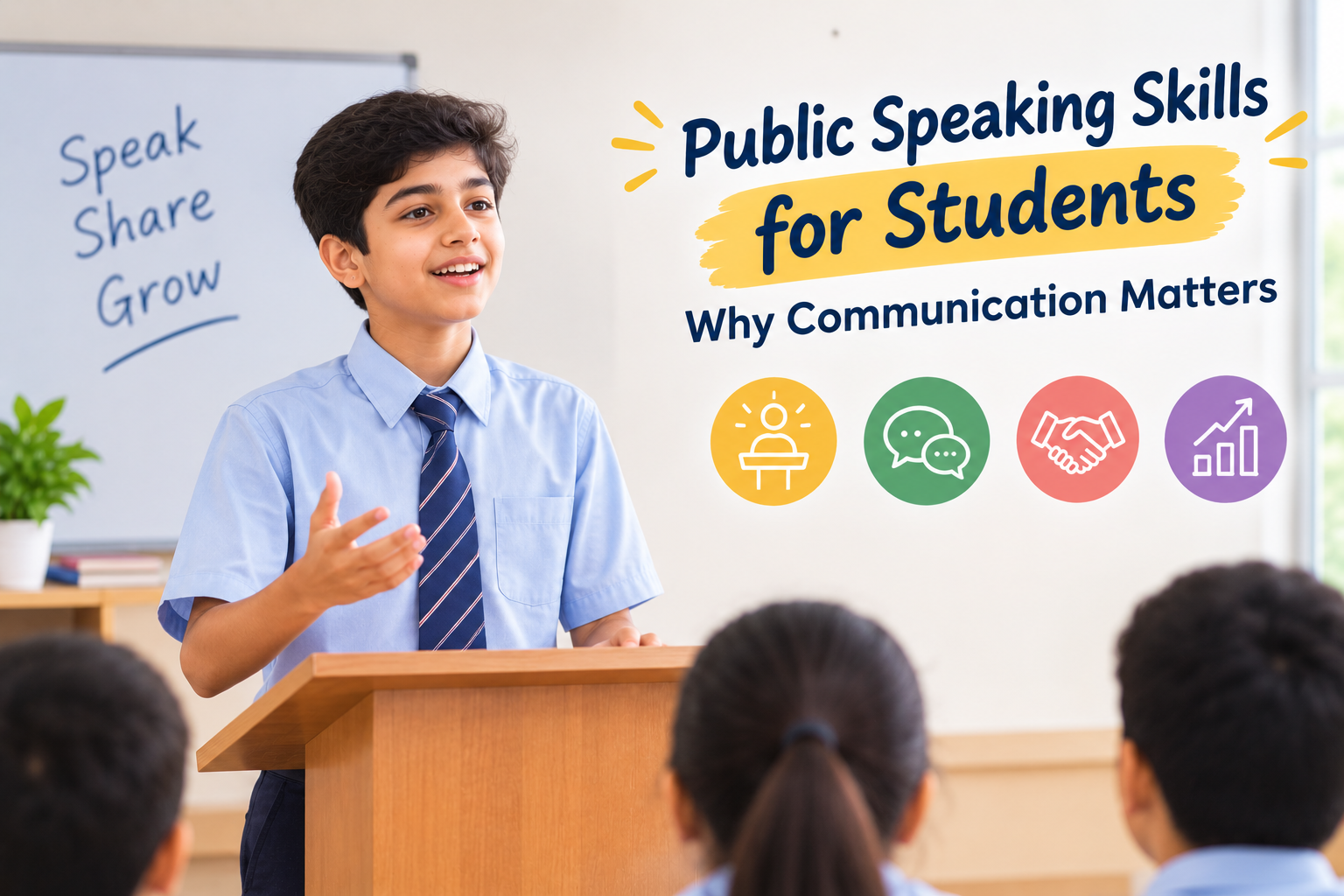
Public speaking is not only a skill for students who want to become speakers, leaders or civil servants. The ability to explain an idea clearly, speak with confidence and communicate with different people can benefit students in almost every area of life. From classroom presentations and group discussions to interviews and future professional situations, communication plays an important role.
For many students, speaking in front of others can initially feel uncomfortable. They may worry about making mistakes, forgetting what they want to say or being judged by classmates. This is normal. Public speaking is not simply a natural talent that some students have and others do not. It is a skill that can be developed through regular practice and constructive feedback.
The first step is learning to organise thoughts before speaking. Students often know what they want to say but struggle to communicate it because their ideas are not arranged clearly. A simple structure can help: introduce the topic, explain the main point, give an example and conclude with the key message. This makes communication easier for both the speaker and the listener.
Another important skill is speaking in one's own words. Students sometimes try to memorise entire speeches. While preparation is useful, memorising every sentence can make speaking feel stressful. Understanding the topic is more valuable. When students know what they are talking about, they can explain the idea naturally and respond more comfortably if someone asks a question.
Public speaking also teaches students how to listen. Good communication is not only about talking. Students need to pay attention when others are speaking, understand different viewpoints and respond appropriately. Classroom discussions and group activities can provide useful opportunities to develop this ability.
Confidence is another area that improves with practice. Confidence does not necessarily mean speaking loudly or never feeling nervous. A confident speaker can feel nervous and still communicate clearly. Students can gradually become more comfortable by starting with short presentations, answering questions in class, participating in discussions and speaking to small groups before moving to larger audiences.
Body language also contributes to effective communication. Maintaining reasonable eye contact, sitting or standing with good posture and using natural gestures can make a presentation more engaging. Students do not need to imitate professional speakers. The goal is simply to appear comfortable and attentive while communicating.
Vocabulary and pronunciation matter as well, but students should not become afraid of making language mistakes. Communication is more important than trying to use complicated words. Clear and simple language often makes an idea easier to understand. Regular reading can help students naturally improve their vocabulary and become familiar with different styles of expression.
One effective way to practise public speaking is through discussions about topics students already understand. A student can be asked to speak for two minutes about a book they read, an environmental issue, a school activity, a current event or something they are interested in. The objective is not to deliver a perfect speech. It is to practise thinking, organising and expressing an idea within a limited time.
Debates can take this further by requiring students to consider different sides of an issue. A student may have to support an argument they do not initially agree with. This teaches them to listen, understand opposing viewpoints and build logical responses. These are valuable thinking skills as well as communication skills.
Public speaking can also support academic performance. Students who become comfortable explaining concepts aloud may find classroom presentations, seminars and group projects easier. Explaining an idea to someone else can also reveal whether the student truly understands it.
For students interested in civil services, communication becomes particularly relevant over the long term. UPSC and KPSC preparation eventually involves expressing ideas through written answers, discussions, interviews and other forms of communication. Developing the ability to organise thoughts and communicate clearly during school years can therefore provide a useful foundation. However, students do not need to begin formal interview preparation at a young age.
At Compass IAS Academy, public speaking and debate are part of the IAS @ School foundation programme for students from Class 8 to 12. Students get opportunities to discuss ideas, present arguments, participate in activities and develop communication alongside current affairs, reasoning, analytical thinking, reading and writing. The focus is on gradually building confidence and the ability to express ideas rather than expecting students to become polished speakers immediately.
Parents and teachers can support this development by creating an environment where students are allowed to make mistakes. Correcting every small error can make a student afraid to speak. Constructive feedback works better: identify what was done well, suggest one or two improvements and give the student another opportunity to try.
Most importantly, public speaking should become a regular activity rather than an occasional performance. A few minutes of meaningful speaking practice each week can gradually make a difference. Students can speak about what they learned, explain a news story, present a book review or participate in a discussion.
Public speaking is ultimately about more than standing on a stage. It is about having an idea, organising it and communicating it so that another person can understand it. When students develop this ability early, they gain a skill that can support education, relationships, leadership and future careers—whatever path they eventually choose.