UPSC Coaching for School Students How Early Preparation Can Build a Strong Foundation
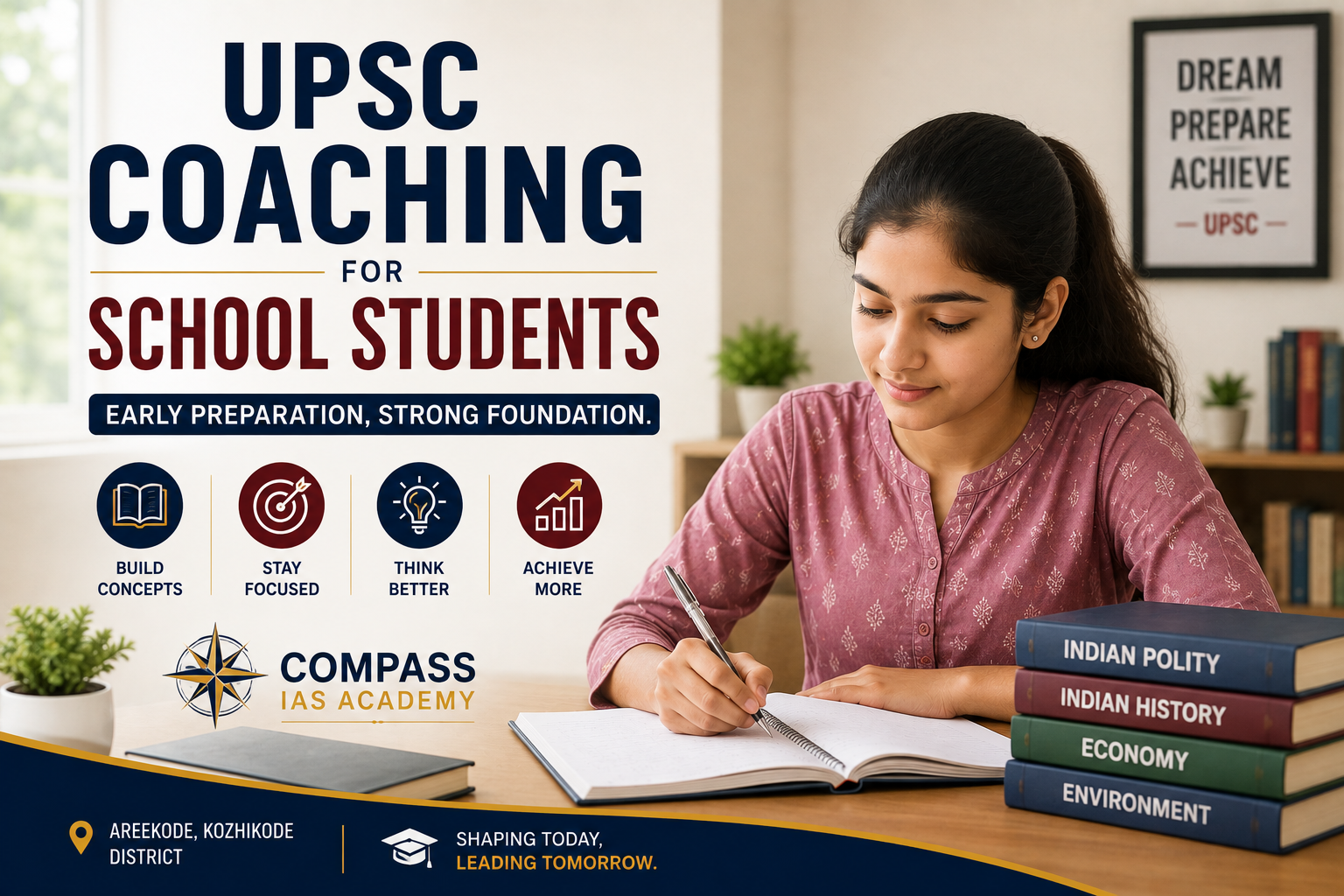
UPSC coaching for school students is becoming an area of interest for parents who want their children to develop a strong foundation for competitive examinations and future careers. But early preparation should not mean putting a school student through the same intensive routine as a graduate UPSC aspirant. At the school level, the more useful objective is to develop curiosity, reading habits, awareness, reasoning and communication skills that can support future academic and civil-services preparation without taking away from regular schooling.
The idea of starting early often raises an important question among parents: “Does a student really need UPSC coaching in Class 8, 9 or 10?” The answer depends on what is meant by coaching. A school student does not need to memorise the entire UPSC syllabus years before appearing for the examination. Instead, early exposure can be used to develop the skills and habits that become valuable later.
One of the most important foundations is reading. Civil-services preparation eventually requires candidates to work with a large amount of information and understand issues from different perspectives. A student who gradually develops the habit of reading about society, government, science, the environment and national and international developments can begin building this ability naturally. The objective is not to make a child read like a full-time aspirant, but to make learning about the world a regular part of education.
Current affairs can play a similar role. For a school student, current affairs should not simply become a list of headlines to memorise. Discussions about important events can help students ask questions: What happened? Why did it happen? Who is affected? What are the different viewpoints? What could be the consequences? This kind of questioning encourages students to move from simply receiving information to thinking about it.
Reasoning and analytical thinking are also valuable well beyond the UPSC examination. Students regularly encounter situations where they need to compare information, identify patterns, evaluate an argument or reach a conclusion. Developing these abilities early can strengthen academic learning as well as future competitive-examination preparation. It also supports the broader goal of creating students who can think independently rather than depend entirely on memorised answers.
Communication is another important part of early preparation. Civil-services aspirants eventually need to express ideas clearly in writing and conversation. School is an ideal period for developing confidence in speaking, discussion and debate. Activities such as explaining an opinion, participating in a debate or discussing a current issue can help students learn how to listen to different perspectives and communicate their own reasoning.
This is why an effective foundation program for school students should look different from conventional UPSC coaching for graduates. The focus should be on developing capabilities rather than rushing through an examination syllabus. Students should have opportunities to explore current affairs, civics, reasoning, analytical thinking, public speaking, debate, communication, reading and writing in an age-appropriate way.
At Compass IAS Academy, this philosophy is reflected in IAS @ School, a fully online foundation and leadership program for students from Classes 8 to 12. The program is designed to work alongside regular school education rather than replace or interfere with it. Its Zero Interference Schedule uses weekends and evenings so that students can continue their school studies and board-examination preparation without disruption.
The program also recognises that not every student who develops an interest in civil services will eventually become a UPSC aspirant. Skills such as public speaking, communication, critical thinking, reading and reasoning can be useful across many academic and professional paths. Early civil-services orientation can therefore be viewed as an education in thinking and awareness rather than simply early exam preparation.
Mentorship is another useful component for students at this stage. School students may not yet understand what the civil-services examination involves or how different subjects connect with future careers. Having access to mentors can give them an opportunity to ask questions, discuss current affairs, receive guidance and gradually understand the broader idea of public service.
The role of parents is also important. Early preparation should support a student's development rather than create unnecessary pressure. Parents should look for programs that respect school commitments, encourage curiosity and provide a balanced learning environment. A child does not need to spend several hours every day studying UPSC material in order to develop a useful foundation.
Faculty experience can also contribute to the quality of such a program. The Compass IAS team brings first-hand experience of the UPSC journey to its educational approach. As a team, the educators have cleared the UPSC Civil Services Preliminary Examination multiple times and have appeared at the UPSC Interview stage. Each faculty member has cleared the Preliminary Examination at least twice. This experience helps connect early foundation-building with an informed understanding of what serious civil-services preparation eventually requires.
Starting early should also not mean trying to predict a student's entire career. Students in Classes 8 to 12 will continue to discover different interests and strengths. The purpose of a foundation program is therefore to give them useful exposure and skills while leaving room for those interests to develop naturally.
For parents considering IAS coaching for school students, the most useful questions are therefore not simply “How much of the UPSC syllabus will my child complete?” Instead, ask whether the program develops reading habits, current-affairs awareness, reasoning, communication and analytical thinking. Does it fit around school? Is there appropriate mentorship? Are students encouraged to ask questions and form their own views? And does the program focus on learning rather than memorisation?
Early preparation works best when it is gradual. A Class 8 student does not need to prepare like a graduate, and a Class 12 student does not need to follow the same routine as someone sitting for the examination immediately. What matters is building the right foundation at the right stage.
For students and parents exploring UPSC coaching for school students, IAS @ School at Compass IAS Academy provides an online pathway for Classes 8 to 12, combining civil-services awareness with skills such as current affairs, reasoning, analytical thinking, public speaking, debate, reading, writing and communication. The aim is to give students an early foundation while allowing regular school education to remain at the centre of their academic journey.
Early preparation, when approached thoughtfully, is not about starting the examination too soon. It is about starting the right habits early.